What Is Laser Surgery?
Laser surgery uses a highly focused beam of light instead of a traditional scalpel to cut, seal, or reshape tissue. Because the beam is so precise, it can target damaged or diseased tissue while leaving the surrounding healthy tissue largely untouched. This makes many laser procedures faster, less painful, and quicker to recover from compared to open surgery.
Laser Surgery is being used across nearly every medical field today. Some of the most common applications include -
How Does Laser Surgery Work?
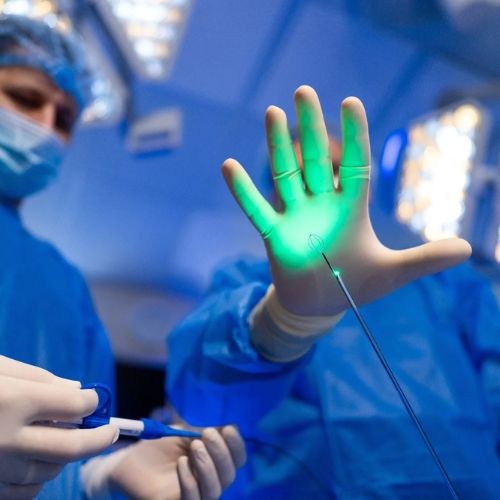
A laser produces a narrow, high-energy beam of light that is aimed with precision at the treatment site. Depending on the setting, the beam can cut through tissue like a scalpel, vaporise abnormal cells, or seal off small blood vessels and nerve endings as it cuts. This sealing effect is what makes many laser procedures lower-bleeding and lower-pain than conventional surgery.
Surgeons control the laser's wavelength, intensity, and pulse duration to match the specific tissue being treated, so the same underlying technology can be adapted for very different procedures - from removing a skin lesion to reshaping the cornea or vaporising a tumour.
Types Of Laser Surgery
The right type of laser and technique depends on the condition being treated. Common categories include -
- AEye Conditions - LASIK and related refractive procedures reshape the cornea to correct vision, while lasers are also used to treat glaucoma and diabetic retinopathy.
- BEar, Nose & Throat Conditions - Lasers are used for tonsil and adenoid procedures, treating vocal cord lesions, and clearing nasal or sinus blockages with minimal bleeding.
- CSkin Conditions - Laser resurfacing, scar and birthmark removal, and treatment of skin lesions use precise beams to target the affected layer of skin only.
- DSpine Conditions - Laser-assisted discectomy can relieve pressure on a compressed nerve caused by a bulging or herniated disc, often through a very small incision.
- EOrthopaedic - Lasers assist in soft-tissue procedures around joints, helping to reduce inflammation and speed healing after minimally invasive orthopaedic surgery.
- FCancer Management - Lasers can shrink or destroy tumours, relieve blockages caused by a tumour, and are sometimes combined with light-sensitive drugs (photodynamic therapy).
- GGastrointestinal & Colorectal Conditions - Laser techniques are used to remove polyps, treat haemorrhoids, and manage certain gastrointestinal tumours with less discomfort than open surgery.
Benefits Of Laser Surgery
- Smaller incisions and less scarring compared to open surgery.
- Reduced bleeding, since the laser seals small blood vessels as it cuts.
- Lower risk of infection due to the precision and often shorter procedure time.
- Less post-operative pain and swelling for many procedures.
- Shorter hospital stay, with many laser procedures done on a day-care basis.
- Faster return to normal activity and work.
Best Laser Surgery Hospitals In India
Forerunners Healthcare connects international patients with accredited, world-class hospitals across India for safe, high-quality treatment at an affordable cost.
 Manipal Hospital (Old Airport Road), Bangalore
 Global Hospital, Mumbai
 Fortis Memorial Research Institute (FMRI), Gurgaon
 Fortis Hospital (Bannerghatta Road), Bangalore
 Artemis Hospital, Gurugram
 Saifee Hospital, Mumbai
 Medanta - The Medicity, Gurugram
 Max Super Speciality Hospital, Delhi
 Kokilaben Dhirubhai Ambani Hospital, Mumbai
 Jaslok Hospital, Mumbai
 Lilavati Hospital & Research Centre, Mumbai
 Indraprastha Apollo Hospital, Delhi
What To Expect During The Procedure?
Most laser procedures are performed under local or regional anaesthesia, though some may require general anaesthesia depending on the site and complexity. Your surgeon uses a handheld laser device or a laser attached to an endoscope to precisely target the treatment area while continuously monitoring the surrounding tissue. Many procedures are completed within an hour and patients can often go home the same day or after a short observation period.
Recovery After Laser Surgery
Recovery time varies by procedure, but is generally faster than with traditional surgery. Minor skin or ENT procedures may only need a few days of care at home, while spine or orthopaedic laser procedures may need a couple of weeks of activity restriction. Your surgeon will give you specific wound care, medication, and follow-up instructions based on the exact procedure performed.
Risks Of Laser Surgery
Laser surgery is generally very safe when performed by an experienced surgeon, but as with any procedure there are some risks, including infection, scarring, changes in skin colour at the treatment site, and in rare cases the need for a repeat procedure. Your surgeon will discuss risks specific to your condition and treatment plan before the procedure.
Why Choose India For Laser Surgery?
India is home to hospitals equipped with the latest generation of surgical lasers across ophthalmology, ENT, dermatology, spine, orthopaedics, oncology, and gastroenterology. International patients are drawn by the combination of internationally trained surgeons, modern laser technology, and treatment costs that are typically a fraction of those in the US, UK, or Europe - without compromising on quality or safety.

 United States
 United Kingdom
 Canada
 Australia
 New Zealand
 Nigeria
 Kenya
Kenya Ethiopia
 Uganda
 Tanzania
 Zambia
 Congo
Congo Sri Lanka
 Bangladesh
 France
 Afghanistan
 Nepal
Nepal Uzbekistan